On this page
- Aloe ferox carries around 20 times more bitter sap and roughly twice the amino acids of aloe vera.
- In a 2015 head-to-head study on atopic dermatitis, both aloes helped. Aloe ferox did more to reduce the immune overreaction behind it.
- The same research measured lower IgE levels, the antibodies behind allergic reactions.
- Its sticky gel forms a physical barrier over a hot spot, which is a big part of what it does.
- It has shown antimicrobial activity against E. coli and Staphylococcus in laboratory testing.

If your dog constantly scratches, licks their paws, or gets hot spots, you're not alone. Skin problems are among the most common reasons dog owners visit the vet, and finding natural relief that actually holds up can feel overwhelming.
You've probably heard about aloe vera for skin care. There's a related plant worth knowing about too: Aloe ferox. This African succulent is the one we build our skin range around, and the comparison studies are the reason why.

What makes Aloe ferox different from aloe vera?
Aloe vera has long been the go-to plant for skin care, but Aloe ferox is the more concentrated member of the family. Two differences stand out:
- More concentrated actives. Aloe ferox contains roughly 20 times more bitter sap (the fraction that carries aloin, the compound responsible for its bitterness) and around twice the number of amino acids compared with aloe vera.
- How the two compared head to head. In a 2015 comparative study of the two plants in atopic dermatitis, both aloe species reduced inflammatory responses, and Aloe ferox was the more effective of the two at reducing the immune overreaction that sits behind allergic skin conditions.
What the research says about itchy skin
1. Irritated, uncomfortable skin
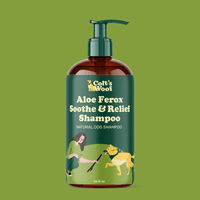
When your dog can't stop scratching, it's usually because the skin is inflamed and uncomfortable. In laboratory comparisons, Aloe ferox gel acted on the inflammatory response that drives that scratching cycle, and reduced measured skin sensitivity on contact, which is the reasoning behind putting it in a soothing shampoo rather than a rinse-off detergent base.
2. Hot spots and the skin barrier
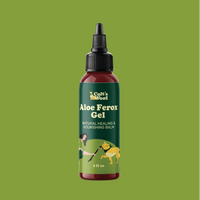
Hot spots (those raw, weeping patches) can appear overnight and spread quickly. The sticky gel composition of Aloe ferox, which is what our Aloe Ferox gel is built on, forms a physical barrier over the area, insulating it from further irritation.
In animal-model studies, Aloe ferox whole-leaf preparations supported wound repair with no side effects observed over the study period, and limited the bacteria that take hold in damaged skin.
3. The allergic response itself
Dogs with allergies often develop skin problems as the immune system overreacts to triggers like pollen, food ingredients, or something in the environment. The comparative research found Aloe ferox reduced IgE levels, the antibodies behind allergic reactions, more than aloe vera did. That is a finding about the plant extract in a study setting, and it's the part of the research we find most interesting, because it points at the response rather than only the irritation it leaves behind.
4. Dry, flaky skin
Aloe ferox has been measured improving skin texture and forming a seal within the skin layers that slows moisture loss while supporting hydration. For dogs with dry, flaky skin that seems to get worse no matter what you do, that moisturising effect can make a real difference to their comfort and coat condition.
5. Bacteria on damaged skin
When dogs scratch skin open, bacteria can quickly make things worse. Aloe ferox has shown activity against common bacteria including E. coli and Staphylococcus species in laboratory testing.
The science behind the soothing
The published work points at a few mechanisms at once:
- Blood flow. It dilates capillaries and veins, increasing the transport of nutrients to damaged skin.
- Skin barrier. By improving skin texture and forming protective layers, it helps limit moisture loss and further irritation.
- Inflammatory response. Multiple studies have measured its effect on erythema and the inflammatory response in comparative testing.
A natural choice for your best friend
When your dog is uncomfortable, you want relief that works, gently, and safely. Aloe ferox is a natural, well-studied option that has outperformed aloe vera in the comparisons that matter most for canine skin.
Whether your dog deals with seasonal allergies, persistently itchy skin, or the occasional hot spot, it is a sound place to start. Your dog can't tell you when they're uncomfortable, but they can certainly show you.
Sources
5 references- "Comparative study of leaf gel extracts of Aloe ferox and Aloe vera in the topical treatment of atopic dermatitis." (2015). PubMed.https://pubmed.ncbi.nlm.nih.gov/26510768/
- Incision wound healing study in rat and rabbit models (2008). PubMed.https://pubmed.ncbi.nlm.nih.gov/18773950/
- "Therapeutic properties of Aloe ferox whole-leaf juice." Journal of Ethnopharmacology, ScienceDirect.https://www.sciencedirect.com/science/article/abs/pii/S0378874108004315
- "Skin hydrating and anti-erythema activity: a comparison between Aloe ferox and Aloe vera." PMC, National Institutes of Health.https://pmc.ncbi.nlm.nih.gov/articles/PMC4078333/
- "Aloe Ferox." Topics in Agricultural and Biological Sciences, ScienceDirect.https://www.sciencedirect.com/topics/agricultural-and-biological-sciences/aloe-ferox
This article is for educational purposes only and is not intended to diagnose, treat, cure or prevent any disease. Always talk to your veterinarian before starting anything new for your dog's skin. Every dog is different, and persistent skin problems deserve a proper look.